Basin wiki · Animals
Chuckwalla
Sauromalus ater · Sauromalus obesus
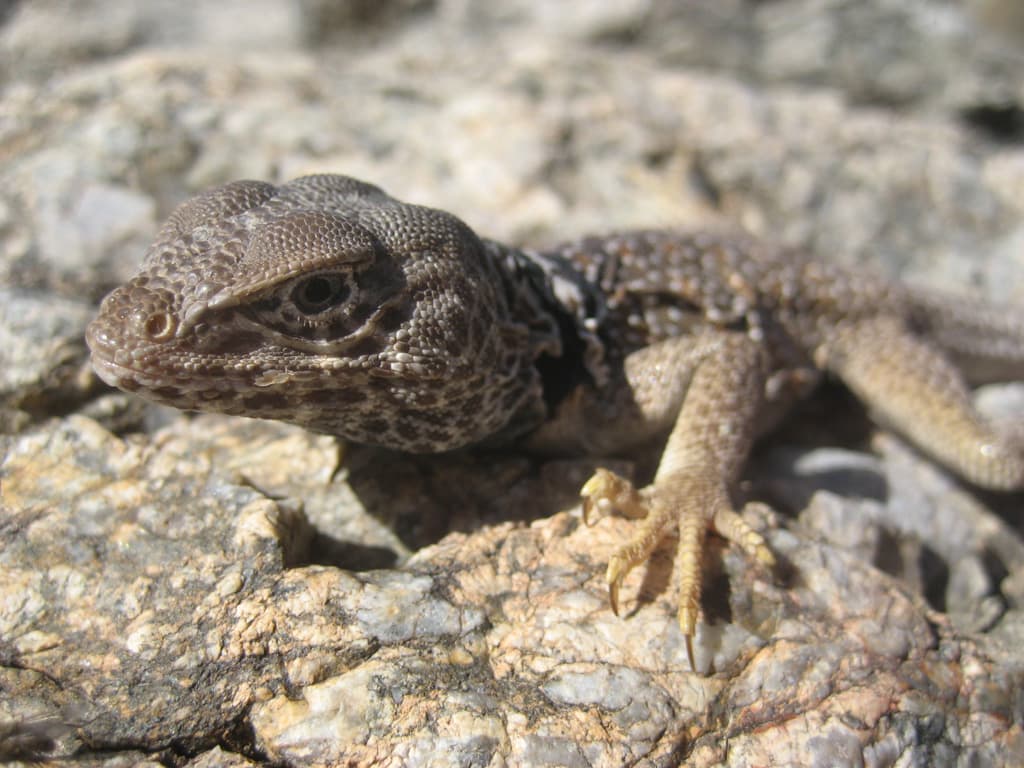
The big vegetarian lizard of the rock piles. If it wedges into a crack and inflates, that crack is its whole plan.
Where you'll see it
Chuckwallas live in rock: outcrops, boulder piles, and the edges of alluvial fans with crevices, which describes a lot of Joshua Tree National Park and the rocky margins of Joshua Tree and Yucca Valley. Mid-morning, when the rock is warm and the air is still climbing, is when they bask at a crack entrance. The park’s reptile notes point to rocky slopes and boulder-strewn fans as lizard country generally, and this is the largest of those lizards people regularly see.
How to tell it
The body is wide, the tail thick at the base, and the skin loose. Adult males are often dark on the head and forebody with a lighter, sometimes banded tail. Females and younger animals are more banded overall. They eat plants. A fast, skinny lizard on the same rock is usually something else, often a collared lizard or a spiny lizard. The name in older books is Sauromalus obesus; current lists use Sauromalus ater for this animal.
The crevice trick
When alarmed, a chuckwalla runs to a familiar crack and inflates so the rough scales grip the rock. Pulling on the tail injures the lizard and does not defeat the inflate. There is no reason to extract one. If you climb, watch the handholds: a basking chuckwalla will usually bail before you arrive if you don’t slap a hand on top of it.
Around houses built in the rocks
Rock-house neighborhoods and boulder-edge lots are habitat. Cats take juveniles. Pesticides on “weeds” remove the flowers and annuals they eat. A chuckwalla in the yard is not a pest and is not a pet; California tightly regulates native reptiles, and the park’s rule is hands off. Photos from the trail are the right level of interest.